

Overview
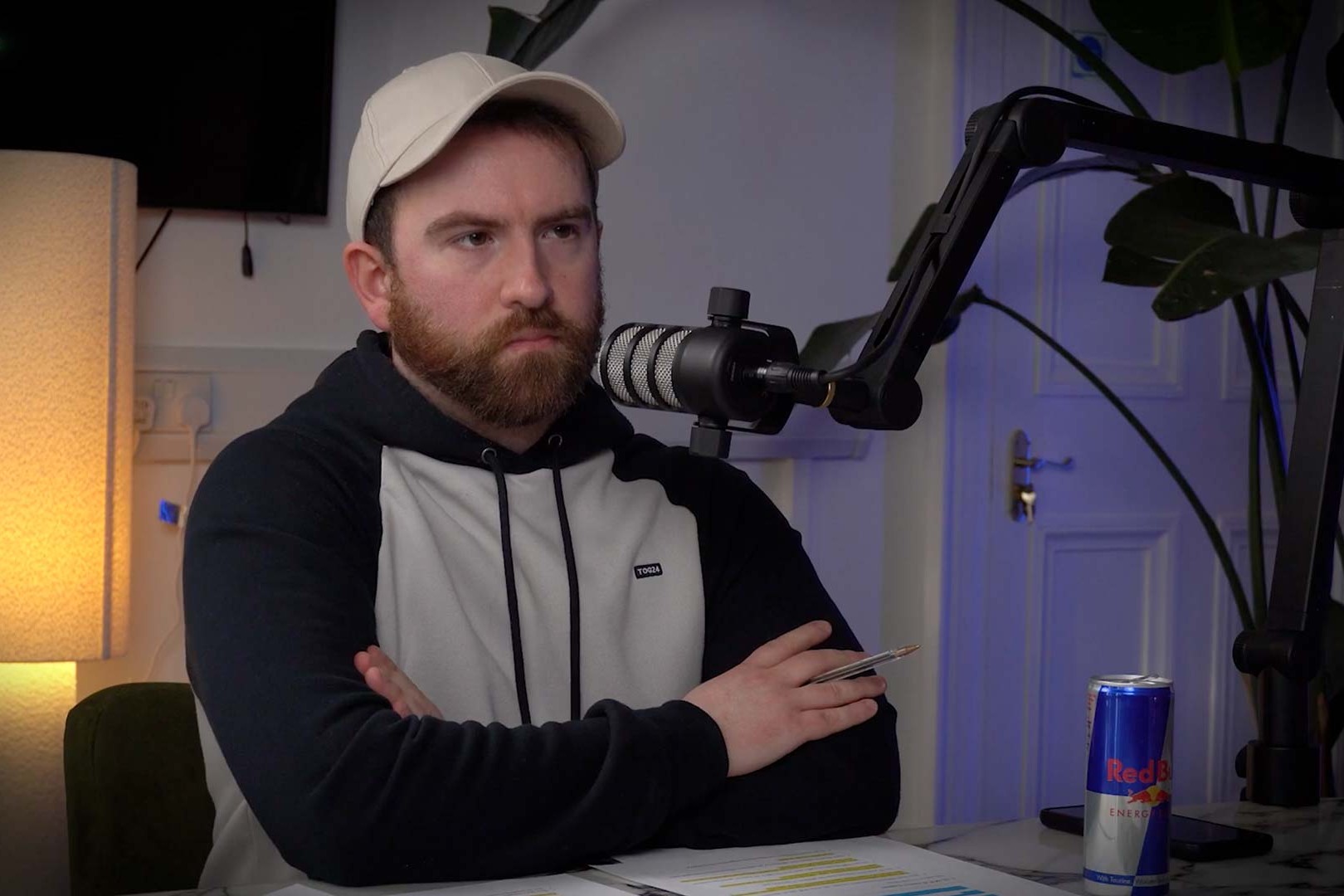
Welcome to the first episode of the Igaming SEO Show. Hosted by Ari Pournaras (Founder of Big Pond Digital) and Dylan Welsh (SEO manager), this show breaks down the strategies, experiments, and real-world SEO insights used to rank some of the most competitive keywords globally.
The Transcript
Hi, welcome to the first Big Pond Digital podcast. We are an SEO agency based in Scotland with a global client base, and we’re starting this podcast to share our experiences in the space.
I’m Dylan, SEO Manager at Big Pond Digital since 2020, and today I’m speaking with Ari, the founder of the company.
Ari, do you want to introduce yourself?
Yeah, hi, I’m Ari, founder of Big Pond Digital. I’ve been involved in SEO since 2008, so quite a long time, and I’ve been running Big Pond since 2018.
What makes iGaming SEO different from traditional SEO?
iGaming is simply super competitive compared to other industries. You get a lot of industries that fall into a certain group — pharma, adult, gambling, finance — all the grey areas that are super competitive. The SEO tactics are slightly different too.
How did Big Pond start in the iGaming space?
Big Pond was formed by accident, really. It was never my intention to run an agency. I started out as an affiliate, running a website that did really well. Off the back of that I built a few more affiliate sites, started going to conferences, meeting people, and got a few of them asking if I could do their SEO. Started with one, then got another, and it just naturally evolved into what it is today. I had to hire staff, do all the boring business stuff that nobody wants to do — but here we are, a few years on, still going strong and growing.
What are the biggest misconceptions people have about SEO in the gambling industry?
I think a lot of people are afraid of it. When I started out in SEO I was working in the fashion industry, lost my job and applied for a role in the gambling space mainly because I wanted a challenge. A lot of people don’t touch it because they think there are dodgy tactics involved — and obviously there’s some of that — but you actually learn a lot too. The gambling space is full of innovators. The tactics we’re using today will filter down to other industries a year or so down the line. That’s why I’m passionate about it. I never had an interest in gambling itself, but I love the industry because it’s competitive, cutting edge, and ahead of the curve.
What does the SERP actually look like for a casino or sportsbook in 2025?
The search results are quite mixed. AI overviews are taking up a big chunk of the real estate. PPC ads are everywhere — yesterday I was looking at my phone and I genuinely couldn’t distinguish between the ads and the organic results. There’s a lot less space to compete in compared to years ago when most people searched on desktop. Now it’s mobile, ads, AI overviews — you need to scroll past all of that before you even find an organic result. It’s a lot noisier and a lot harder to break through.
Are operators at a natural disadvantage?
I think anybody entering the gambling space right now trying to compete online is at a natural disadvantage, especially with a fresh domain. Unless you have very deep pockets — and even then, you’re not going to compete straight away. You’re playing catch-up essentially.
That said, there are still opportunities in certain countries and sub-niches. If you go more specific — crypto gambling, for example — you can grow faster than if you’re targeting something like “online casino” in the UK. I’ve had conversations in the last year where brands have come to us with those ambitions and our answer has basically been: you’re going to need £400k and come back to me in two years.
How do regulations and compliance impact SEO strategy?
The UK is particularly tough right now. It’s super strict, very competitive, and there’s not a lot of room to manoeuvre even for established brands. It’s a good thing in many ways, but it is restrictive. For other countries, different laws apply, so you really need to research the regulatory landscape thoroughly before deciding which market to focus on.
What goes into ranking for high-volume, high-intent terms?
A lot of patience, first and foremost. You need CMOs who actually understand the industry and how long SEO takes — and the investment it requires. Good communication between the agency and in-house SEOs is key. Beyond that, you need solid technical foundations, content, and links all working together. UX matters too, as do things like virality and traffic from other channels. Conversion rates, traffic signals — they all feed into each other.
How much of it is links versus on-page?
Links are a huge part of what we do in iGaming. Once you take good content and solid on-page SEO off the table, what’s left is links. You need a good profile — and it gets very competitive even approaching page one for the big terms. There are tier two links, refreshing old links — a lot goes into it.
What are the brutal realities people don’t want to hear?
It’s a tough sell. When you go to a new brand and say “give us a bunch of money and it’s going to be a year and a half to two years before you see real traction” — that’s a difficult conversation. So we try to ease clients in, but be honest and realistic from day one. How long does it actually take? It depends on the country and the competition. In the UK, a very long time — especially for a new brand. In a more open market, maybe a year. But it always takes time.
What does the link profile of a top iGaming site look like?
Usually it’s a blend. As a brand — or even as an affiliate — you need to be seen as a brand. That means having a presence on social media, bookmarks, review sites, citations, mentions in newspapers, Reddit threads, forums. Then on top of that, the super relevant, high trust flow, topically relevant links. A site that’s ranking well has a strong overall digital footprint — not just the links you’d typically build day to day, but everything a legitimate big brand would naturally have.
Why is link building so expensive in this niche?
It’s expensive everywhere, but iGaming specifically is in a different league. A lot of mainstream publications still won’t link to gambling sites. Because of the nature of the industry, websites have actually popped up specifically to link to operators — and webmasters know how lucrative casino traffic is. They know their worth and they price accordingly. Our job as an agency is to negotiate that down as much as possible, but a lot of them won’t budge — they get so much outreach that they can afford to ignore negotiation entirely.
In a market like Finland, for example, we had to acquire Finnish-language links and they were three or four times the price of a standard link. You could barely negotiate. So sometimes you compensate by going after cheaper .com links to bulk out a profile, then investing in the specific country-level TLD that will actually move the needle.
What separates a high-quality link from a useless one?
A lot of SEOs chase metrics blindly — and you need to remember those metrics come from third-party tools. The first two things I look at are traffic and relevancy. Does the site you want to buy a link from actually have traffic? Is it relevant to your brand? Is the placement going to fit naturally? If you can answer yes to those, you’re off to a good start. After that, look at trust flow, topical trust flow, and work through a checklist if you’re buying at scale.
You also need to keep an eye out for sites where traffic has clearly been pumped in artificially — you can see it in the data, a sharp spike then a crash. And there’s a sniff test too. If a site covers Jenna Ortega’s net worth alongside vitamin advice for elderly people and the latest casino bonuses, it covers everything under the sun. The broader it is, the less topical relevance it has. You can tell straight away.
Have you ever seen a site tank because of bad links?
My own site tanked because of bad links, back in 2012. I was at a conference negotiating a deal when the affiliate manager I was speaking to mentioned, almost in passing, that my rankings had just collapsed — apparently they tracked my rankings hourly. I hadn’t checked in a day because I’d been out the night before. I went back to the hotel and sure enough, I was nowhere to be seen. I managed to recover the site fairly quickly, but it was around the time of the first Google Penguin update, which put a lot of businesses out of business. The site had been built on pretty much pure black-hat links — minimal budget, exact match domain, thin content — and it had ranked well for about a year before it all came crashing down. There were probably 50 similar sites that tanked the same day.
You do learn a lot from it though. That’s when I actually started figuring out how to build something sustainable — not just rank and tank.
If you had £10k to spend on links as a new brand, how would you allocate it?
First, go after all the free links you can get — social profiles, bookmarks, Web 2.0s, citations, any relevant mentions on social networks. Get all of those in place first. Then when it comes to spending the budget, initially focus on building authority to the homepage rather than going deeper into the site. I’d say at least the first six to eight months should be about building that homepage authority, then start diversifying into deeper pages.
What technical issues do you see most often on iGaming sites?
Migrations gone wrong — by a mile. When brands re-platform and don’t have the right planning in place, a lot can go wrong. If SEO is a major traffic driver, you absolutely need a migration plan. That’s where I see most mistakes.
How does site structure impact rankings for competitive terms?
Massively. Everything from picking the right domain to planning the right architecture plays a big role, especially early on when you’re building your brand. If you’re targeting multiple markets, international SEO needs to be sorted from day one — folders, hreflang, everything. What usually happens is brands launch, then go back and try to retrofit it all. It’s far better to have your SEO team involved from the very start. It saves time, money, and a lot of platform tickets that might take six months to get actioned.
Changing a URL without proper planning can wipe out links you’ve built to that page and break all your internal linking in one go. It’s like cutting a thread in a web — it creates a chain reaction. Having everything mapped out in a spreadsheet, knowing where everything lives, having tools to monitor it — that’s how you mitigate the risk.
Do things like schema, page speed, and Core Web Vitals still matter in iGaming?
Absolutely. If you’re spending serious money driving traffic to your site, you want to make sure it loads fast and that the UX is good enough for people to actually convert. Schema helps with search visibility across all engines, including the newer ones emerging right now. And clickstream data is increasingly a factor — if your site is slow or your UX is poor, you get fewer clicks, your rankings drop, and it becomes a self-perpetuating cycle.
Traffic from other sources is also a ranking signal now. If something goes viral within the industry — even just within that community, not millions of hits — search engines tend to reward it. That wasn’t a priority a few years ago. Now it is.
Can you walk us through an example of a site you turned around?
One case involved a migration that had gone wrong — the client came to us months after the fact. We did a full audit: technical, content, links, everything. All the signals pointed back to the week of the migration. It was a significant client with a big backlink budget, and when we dug into it, the issue came down to key pages that had been ranking for high-value terms having large amounts of content removed when the new site went live.
You can get everything technically right in a migration and still cause major damage by removing or changing content. The lesson is: know exactly where you are before the migration, have everything tracked and mapped, and do a full before-and-after comparison to make sure nothing’s been missed. In this case, the damage had been done for six months before anyone realised what had happened.
Related Insights
iGaming News, SEO Tips & Updates

March 1, 2026
Five Essential SEO Strategies for iGaming Websites
Within the intensely competitive world of iGaming, having a well-executed online presence is vital for attracting…
February 14, 2026
The Future of Casino & Sportsbook SEO: What Still Works in 2026
Rising competition, aggressive Google updates, AI overviews, and bigger budgets are reshaping how gambling brands…

March 10, 2026
The Role of Content Marketing in iGaming SEO
In the competitive iGaming landscape, content marketing has emerged as a powerful tool for enhancing Search Engine…